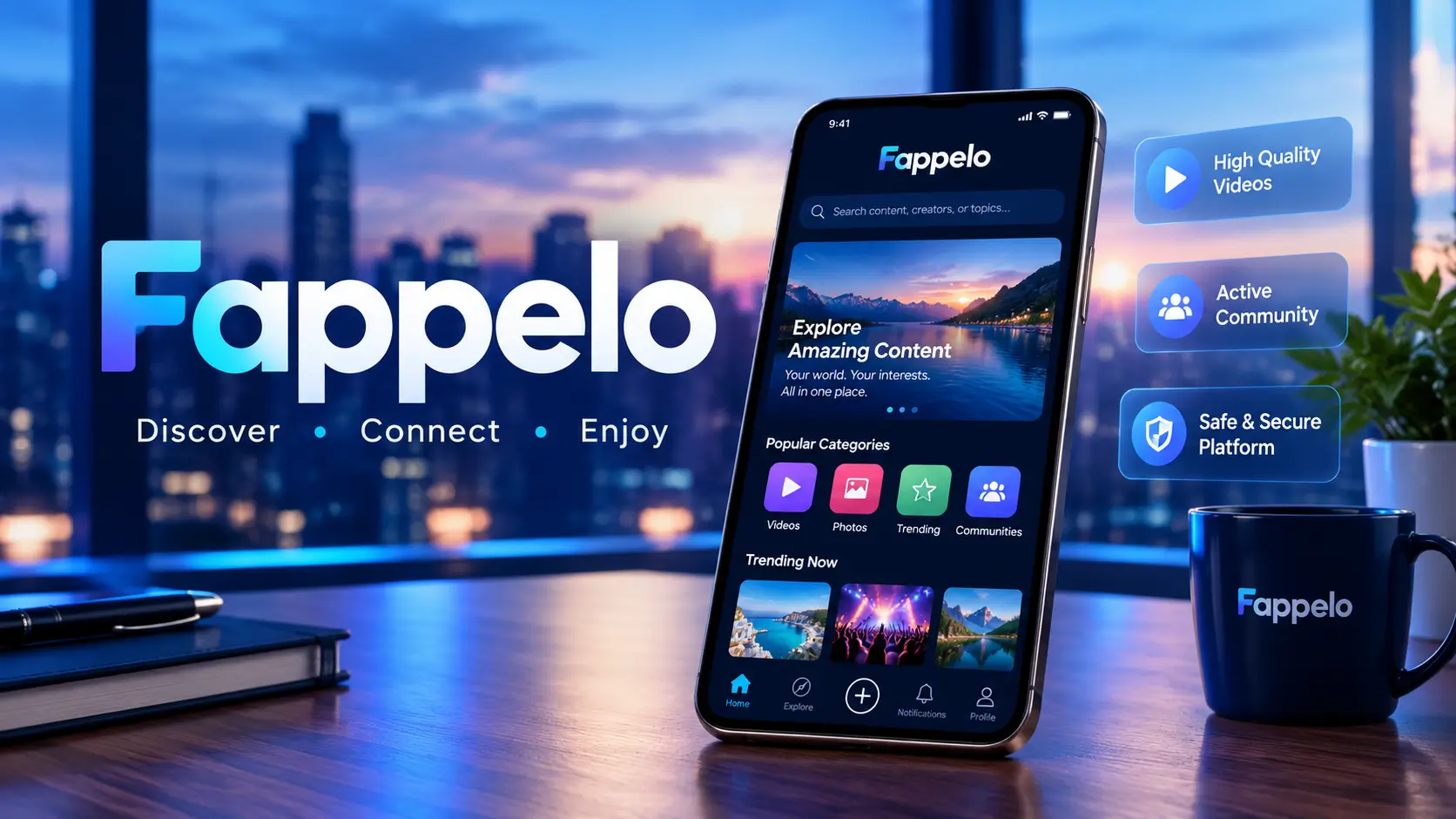
The internet has changed the way people discover information, learn new skills, explore ideas, and stay connected with the digital world. Instead of relying on a single source for every question, modern users frequently visit websites that publish articles across different subjects. These online destinations can help readers understand unfamiliar topics, compare ideas, and find practical guidance for their everyday lives. Fappelo is a name that has attracted attention in this wider digital publishing environment.
For someone encountering the name for the first time, several questions may naturally arise. What is Fappelo? What kind of information can readers expect to find? Is it useful for learning about technology, business, education, or lifestyle topics? How should visitors evaluate the information they discover? Answering these questions requires looking beyond the name and examining the website, its published material, and the purpose of the content available to readers.
Fappelo is best approached as a name associated with online content and digital information rather than as a term with one universally established meaning. The precise website matters because similar spellings can lead to unrelated destinations. Visitors should therefore confirm the complete web address before deciding what a particular version of Fappelo offers.
This distinction is important in an environment where new websites appear regularly and online brands may use similar names. A familiar-looking word does not automatically establish the identity, ownership, services, or reliability of a website.
Understanding Fappelo involves more than opening a homepage. It also means considering how online publishing works, how readers can evaluate articles, what information is useful for different audiences, and which precautions make browsing more responsible.
This guide explores those questions in detail. It examines the role of Fappelo in online information discovery, its potential value to different types of readers, the importance of responsible digital habits, and the considerations that matter when evaluating any content-based website.
What Is Fappelo?
Fappelo is a name used in an online publishing context, particularly by a website that presents articles on multiple subjects. Rather than focusing exclusively on a single specialist field, the website’s visible content spans areas such as technology, business, education, lifestyle, health, travel, and other general-interest topics.
A broad content structure can be useful for readers who have different interests or need information about more than one subject. Someone researching a digital tool may also be interested in productivity advice, while another visitor might arrive looking for educational guidance and later explore business or lifestyle material.
The main idea behind a multi-topic publication is straightforward: make information available in an organized format so visitors can discover articles that match their interests. The usefulness of such a website depends on the quality, clarity, relevance, and accuracy of its individual publications.
It is important, however, not to confuse a website’s name with a complete description of its capabilities. Calling a website a creative hub, for example, does not automatically establish that it provides social networking, private messaging, content monetization, or a dedicated mobile application. Those features must be confirmed through the actual service.
Readers should also distinguish between the name Fappelo and similarly spelled names used elsewhere online. A small spelling difference can lead to an entirely different website, and assumptions about ownership or functionality can create unnecessary confusion.
The most practical approach is to identify the exact domain, explore the available pages, and determine what the website genuinely provides. This allows visitors to form an informed understanding based on observable features rather than relying entirely on descriptions repeated across the internet.
Why Has Fappelo Become a Topic of Curiosity?
Unfamiliar names frequently attract attention because people want to understand what they represent. Someone might encounter Fappelo in a search result, notice it in a shared link, read the name in an online discussion, or see an article discussing the website.
The immediate reaction is often to search for a simple explanation. People want to know whether the term refers to a website, an application, an online service, or something else entirely.
Curiosity alone does not establish that a website is widely used, rapidly growing, or especially popular. Search visibility and public recognition are different concepts. A term can receive attention because it is unfamiliar, because its spelling resembles another brand, or because several websites have published content about it.
This is why a useful explanation of Fappelo should focus on practical questions instead of making unsupported claims about trends or user numbers.
The name may be relevant to several groups of people. Casual internet users might want a basic introduction. Researchers may be interested in understanding the website’s subject areas. Content publishers might examine its editorial approach. Other visitors may simply want to determine whether a particular link leads to the destination they intended to visit.
Each of these audiences has a different purpose, but they share a common need: clear information that distinguishes verified details from assumptions.
The growing number of websites competing for attention makes this type of explanation particularly valuable. When information is scattered across different pages, a structured overview can help readers understand a subject without having to navigate every search result individually.
Understanding the Website’s Main Purpose
A multi-topic publication generally aims to make information accessible to readers with varied interests. Fappelo’s visible publishing structure reflects this broad approach, presenting content across several categories instead of concentrating solely on one subject.
The benefit of this model is flexibility. A visitor does not need to be interested in only one field to find the website relevant. Different topics can serve different needs at different times, allowing a person to move between informational subjects according to current priorities.
For example, a reader who wants to understand a new software concept may find technology content useful. A small business owner might look for business-related explanations, while a student could be more interested in educational material. Someone planning personal activities may prefer travel or lifestyle articles.
A broad website can create a convenient starting point for discovering information. Nevertheless, convenience should not replace careful evaluation. A publication that covers many subjects needs to demonstrate the same attention to accuracy and clarity across its different categories.
Readers should remember that publishing an article about a subject does not automatically make the publisher an expert authority on that subject. Technical questions may require specialist documentation, health concerns may require qualified medical advice, and complicated financial decisions may need professional guidance.
The most responsible way to use Fappelo is to treat its articles as informational resources whose value depends on the material being presented. Read the explanation, consider whether it addresses the original question, and verify important claims when the decision carries meaningful consequences.
This balanced approach allows a general-interest website to serve as a discovery tool without requiring readers to treat every article as a final authority.
Exploring the Different Content Categories
One of the defining characteristics of a broad information website is the variety of subjects available to its readers. Each category serves a different audience and can answer different kinds of questions.
Understanding these categories helps visitors navigate content more efficiently and decide which material deserves their attention.
Technology
Technology affects communication, education, entertainment, employment, and everyday productivity. As digital products continue to evolve, users often need straightforward explanations of unfamiliar terms, software features, and online practices.
Technology articles can help readers build an initial understanding of these subjects. A useful explanation might describe what a particular tool does, clarify common terminology, identify practical considerations, or outline the differences between several approaches.
For beginners, accessible language can make complex concepts easier to understand. For experienced users, a well-organized article may provide a convenient starting point for exploring an unfamiliar product or concept.
However, technology changes quickly. Software features, privacy settings, subscription arrangements, and technical requirements may change after an article is published. Readers should therefore pay attention to publication dates and confirm important details through current product documentation when necessary.
The most valuable technology content explains both possibilities and limitations. It helps people understand not only what a tool can do but also when it may be unsuitable for their particular needs.
Business
Business-related content can help readers understand workplace practices, entrepreneurship, customer communication, planning, and organizational decision-making.
A beginner exploring business topics may need explanations of basic concepts before considering a more complex strategy. Someone running a small company might want to learn how to organize tasks, communicate with customers, improve a website, or evaluate a proposed service.
Clear business articles can turn unfamiliar terminology into practical knowledge. They can also help readers identify the questions they should ask before committing time or money to a particular decision.
Nevertheless, business advice should be evaluated according to the circumstances in which it is applied. A method that works for a small online shop may not suit a large organization, and a strategy appropriate for one market may be ineffective in another.
Readers should be cautious of articles that promise guaranteed profits, effortless success, or universally effective strategies. Sound business decisions typically require consideration of costs, competition, resources, customer needs, and risk.
Education
Educational content supports learning by explaining ideas, presenting concepts in an organized sequence, and helping readers identify areas that require further study.
Students may use general educational articles to become familiar with a topic before attending a lesson or reading a more detailed textbook. Independent learners can use such material to explore subjects outside a formal classroom.
The effectiveness of educational content depends on the relationship between explanation and understanding. A good article does not simply introduce technical words. It explains their meaning, provides useful examples, and helps readers connect new information to concepts they already know.
Readers should also distinguish introductory material from formal academic resources. A general article can clarify an idea, but an assignment, research paper, or examination may require textbooks, scholarly publications, official documentation, or materials recommended by an instructor.
Using a broad content website as a starting point can make learning less intimidating while helping readers recognize what they need to investigate further.
Lifestyle
Lifestyle content covers subjects connected with everyday decisions, personal routines, habits, organization, and interests.
Readers may explore this category when looking for ideas to improve their surroundings, structure their time, develop practical routines, or learn about unfamiliar activities.
Useful lifestyle writing acknowledges that people have different circumstances. Advice that works for one household, schedule, or personal preference may not be appropriate for another.
For this reason, flexible suggestions are often more useful than strict instructions. Readers benefit from understanding the purpose behind a recommendation and adapting it to their own situation.
Lifestyle articles should also avoid making exaggerated promises. A single technique cannot guarantee a particular personal outcome, and individual experiences vary considerably.
The strongest material offers realistic suggestions, acknowledges limitations, and helps readers make decisions that suit their needs.
Health
Health information requires particular care because misunderstandings may affect personal well-being.
General health articles can introduce unfamiliar terminology, explain common questions, or help readers prepare for a conversation with a qualified professional. They may also encourage people to become more informed about everyday health topics.
However, health information should never be treated as a substitute for individualized medical assessment. Symptoms, treatment options, medication requirements, and health risks can vary depending on a person’s circumstances.
Before relying on a health-related article, readers should examine its date, the qualifications of its author where stated, and the quality of its supporting information. Important medical decisions should be discussed with an appropriately qualified healthcare professional.
A responsible reader also recognizes the difference between general education and diagnosis. Reading about a symptom does not establish its cause, and learning about a treatment does not mean that treatment is suitable for every individual.
The value of health content lies in improving understanding and encouraging informed questions, not in replacing professional care.
Travel
Travel content can help readers develop an initial understanding of destinations, preparation, transportation choices, cultural considerations, and practical planning.
Someone exploring an unfamiliar destination may want to learn about its general character before investigating specific arrangements. Another visitor may need a checklist of questions to consider before a trip.
Travel information is especially sensitive to changes over time. Entry requirements, prices, schedules, local rules, weather conditions, and opening hours can change. An article may provide background knowledge, but travelers should verify current arrangements through relevant official services and local providers.
Practical travel writing should also recognize differences in budgets, accessibility requirements, personal preferences, and travel experience.
Rather than treating a recommendation as universally ideal, readers should evaluate whether it fits their own plans. This makes travel information more useful and reduces the risk of relying on outdated assumptions.
Fashion, Food, Gaming, and Other Interests
Fashion articles may explore clothing choices, style preferences, and practical considerations when assembling an outfit. Food content can introduce ingredients, cooking ideas, or methods for organizing meals. Gaming articles may explain game concepts, discuss experiences, or help readers understand particular features.
Other subjects can serve equally specific purposes.
The important consideration is whether an article provides meaningful information instead of repeating general statements. A strong piece should answer a recognizable question, offer relevant context, and help the reader understand what to do next.
When a website covers multiple categories, consistent editorial quality matters. Readers should be able to expect clarity and appropriate caution regardless of the subject they choose.
How Readers Can Navigate Fappelo More Effectively
Finding useful content becomes easier when readers approach a website with a clear objective. Random browsing can be enjoyable, but purposeful navigation is generally more efficient when someone has a particular question to answer.
The first step is to identify the subject. Before opening multiple pages, consider whether the question relates to technology, business, education, health, lifestyle, or another area.
Next, examine the available headings, category links, and article summaries. These elements should help determine whether a particular article matches the information being sought.
Once a relevant article is open, read its introduction and headings before deciding whether to continue. A useful introduction should establish the topic, explain its relevance, and indicate what the reader can expect to learn.
During reading, pay attention to whether the article answers the original question. Some articles provide extensive background but little practical explanation. Others may use broad headings that are not closely connected to the details beneath them.
A useful browsing routine includes the following steps:
- Identify the main question before searching.
- Confirm that the address belongs to the intended website.
- Choose the most relevant content category.
- Review the title, publication date, and introduction.
- Look for specific explanations rather than repeated general statements.
- Verify important claims through appropriate sources.
- Avoid downloads or requests for personal information that are unnecessary for reading the material.
These habits can improve the quality of the browsing experience without requiring specialist technical knowledge.
Potential Benefits of a Multi-Topic Content Website
A well-organized information website can offer several benefits to readers, particularly when its content is easy to find and understand.
Convenience
One clear advantage of a multi-topic publication is the opportunity to explore different subjects within a similar browsing environment.
Readers may move from an introductory technology article to a business explanation or a lifestyle guide without needing to begin every search from scratch.
Convenience is most useful when the website’s navigation is clear and its categories reflect the content accurately. If pages are poorly organized or headings are misleading, a large quantity of content may become difficult to use.
Accessible Explanations
General-interest publications can introduce unfamiliar subjects in approachable language.
A reader does not always need a highly technical discussion. Sometimes the immediate goal is to understand a term, learn the purpose of a tool, or identify the factors involved in a particular decision.
Clear introductory material provides an entry point for further learning.
Accessibility, however, should not come at the cost of accuracy. Simplifying a subject means explaining it clearly, not removing important limitations or creating misleading conclusions.
Discovery
A visitor arriving with one question may discover an adjacent topic that is also relevant.
For example, someone researching digital productivity might become interested in project organization, communication practices, or educational tools. Related discoveries can help readers recognize connections between different subjects.
The benefit depends on the relevance of the additional material. Recommendations and related articles should help visitors expand their understanding rather than distract them with unrelated content.
Independent Learning
Online articles allow readers to explore questions at their own pace.
A person can revisit an explanation, make notes, compare different approaches, and investigate unfamiliar concepts without following a fixed classroom schedule.
This flexibility can support lifelong learning, especially when readers combine introductory articles with more detailed materials.
Independent learning also requires judgment. A reader must recognize when an explanation is incomplete, when the information needs updating, and when a specialist resource is more appropriate.
A Starting Point for Further Research
A general publication can help readers discover the vocabulary needed for more advanced research.
Understanding the terminology surrounding a subject makes it easier to ask better questions and identify relevant documents.
For instance, a reader who learns the basic concepts behind a software tool may be better prepared to read its official user guide. Someone exploring a business concept may become equipped to examine specialist resources more closely.
The best outcome is not necessarily that a reader finds every answer on one website. It is that the reader leaves with a clearer understanding of the subject and a stronger ability to continue learning.
Limitations Readers Should Understand
No content website can be assumed to provide complete, current, and equally detailed information about every subject it covers.
Recognizing these limitations helps readers use resources appropriately.
Information May Become Outdated
Articles remain online even when the underlying information changes.
A tutorial may describe an older software interface. A travel guide may discuss arrangements that are no longer available. A business explanation may rely on practices that have changed within a particular industry.
Readers should examine dates and verify time-sensitive details before acting on them.
Coverage May Be Uneven
A multi-topic website may provide extensive information on one subject and only an introductory explanation of another.
The number of categories does not establish the depth of expertise available in each one.
Readers should judge an article according to how thoroughly it answers the question, whether it provides appropriate evidence, and whether its scope matches the decision being considered.
Promotional Language Can Be Misleading
Websites sometimes use broad descriptions to make their services sound more capable than the available evidence demonstrates.
Phrases such as “complete solution,” “all-in-one platform,” or “ultimate destination” should be evaluated carefully. Such language may describe an intended experience rather than a verified set of features.
A practical evaluation focuses on what a visitor can actually do, which information is available, what conditions apply, and whether the claimed service is clearly explained.
Not Every Article Is Suitable for Every Decision
General-interest writing is often useful for orientation, but some topics demand stronger evidence or professional advice.
Medical treatment, legal rights, financial commitments, and significant business decisions should not depend on a single general article.
Readers can still use introductory content to prepare questions and understand terminology, provided they recognize when additional expertise is necessary.
Is Fappelo a Website, an App, or a Social Platform?
The distinction between a website, an application, and a social platform is important when interpreting online descriptions.
A website allows visitors to access pages through a web browser. An application is software designed to perform particular functions on a supported device. A social platform typically includes identifiable features for interaction, such as user profiles, communication, or community participation.
These categories can overlap, but they are not interchangeable.
The visible publishing structure of a website does not by itself establish the existence of social networking tools or a dedicated application. Likewise, a website that uses language associated with creativity or community should not automatically be assumed to provide member accounts, private messaging, creator payments, or other advanced functions.
Anyone researching Fappelo should inspect the exact website and its actual navigation before accepting a claim about a particular feature.
If a mobile application is advertised under a similar name, users should check its publisher and official listing independently. An application found on an unrelated download page should not be assumed to be affiliated with a website simply because the names look similar.
This verification is especially important when an unfamiliar service requests account credentials, payment information, access to device features, or personal details.
Fappelo and the Importance of Checking the Exact Domain
Domain verification is one of the simplest and most useful habits for avoiding online confusion.
A domain is the web address that identifies a particular destination. Small differences in spelling can point to different websites operated independently of one another.
This matters whenever a person searches for an unfamiliar brand. A search engine may display several pages with similar wording, but similar names do not establish a shared owner or an official connection.
Before interacting with a website using the Fappelo name, carefully examine the address bar. Confirm the spelling, including the ending of the domain, rather than relying only on the title displayed in a search result.
Do not assume that another website using a similar spelling has the same purpose, privacy practices, or ownership. The same caution applies to applications, social media accounts, and third-party pages that use a recognizable name.
Visitors should also avoid treating a working website as automatic proof of legitimacy. A page can load correctly without establishing the trustworthiness of every claim or service associated with it.
When evaluating an unfamiliar destination, review its About page, contact information, privacy policy, terms of use, and any relevant information about the organization responsible for operating it.
If a purchase or formal business relationship is involved, request clear written details about the service, payment terms, responsibilities, and available support.
Privacy and Security Considerations
Responsible browsing requires attention to privacy as well as content quality.
Even when a website appears to offer ordinary articles, visitors should remain aware of what information they share and what actions they take. Unknown links, unnecessary downloads, deceptive pop-ups, and requests for excessive permissions can create avoidable risks.
A cautious approach begins before a visitor submits any information.
First, check whether an account is actually required for the activity. Reading a publicly available article generally should not require installing an unknown application. If a page asks for information unrelated to the service being accessed, consider whether that request is necessary.
Second, avoid reusing important passwords on unfamiliar websites. If registration is genuinely needed, use a strong, unique password and enable additional account protection when the service supports it.
Third, be careful with downloadable files. Do not open unexpected attachments or install software solely because a page claims the download will improve the browsing experience.
Fourth, review privacy notices before providing sensitive information. A privacy policy should explain what data is collected, why it is needed, and how it may be used or shared.
Finally, remember that a secure connection does not prove that a website or its content is trustworthy. Encryption protects information in transit, but it does not guarantee that every operator, advertisement, or claim is legitimate.
These principles apply to all unfamiliar websites, not only Fappelo. The purpose is not to create unnecessary fear, but to encourage informed decisions when browsing the internet.
How to Evaluate the Quality of Fappelo Articles
A website’s overall value depends heavily on the quality of its individual articles. Readers can make better judgments by considering several practical factors.
Accuracy
A useful article should present information that can be checked. Statements about products, services, policies, technical features, and other factual matters should be consistent with reliable evidence.
If an article makes a significant claim without explaining its basis, the reader should be cautious about treating it as established fact.
Clarity
Good writing makes the central idea easy to understand. Headings should describe the content beneath them, paragraphs should develop a recognizable point, and examples should help clarify rather than obscure the explanation.
Clear writing does not mean that every topic must be oversimplified. Complex subjects can be explained carefully without using unnecessary jargon.
Relevance
An article should answer the question suggested by its title.
If the heading promises an explanation of a website, readers should expect meaningful details about its purpose and use rather than a long collection of unrelated statements.
Relevant material respects the reader’s time and makes the article more practical.
Transparency
Readers benefit when authors distinguish between verified information, personal interpretation, and general advice.
A clearly explained limitation can improve an article because it prevents readers from assuming that a recommendation applies in every situation.
Transparent content should not pretend to have conducted tests, interviews, or research that did not occur.
Currency
Some topics remain useful for years, while others change quickly.
A basic explanation of a stable concept may need little updating. A discussion of current product features, requirements, or prices may require frequent review.
Readers should evaluate the publication date in relation to the subject rather than assuming that every older article is worthless or that every newly published page is accurate.
Original Value
An article offers stronger value when it explains a subject in a distinctive and useful way.
Simply repeating common phrases, rearranging familiar definitions, or producing many headings without meaningful detail does little to improve understanding.
Examples, clear comparisons, practical limitations, and thoughtful explanations can make content more valuable to readers.
Together, these criteria provide a simple framework for evaluating Fappelo and any other information website.
Illustrative Case Studies: How Readers Might Use Fappelo
The following case studies are hypothetical examples created to demonstrate practical browsing habits. They are not verified accounts of actual Fappelo users, customer experiences, or measurable results.
Case Study One: A Student Exploring an Unfamiliar Topic
Imagine a student who has been introduced to a subject in class but does not fully understand its basic terminology.
The student searches online and finds an article that appears relevant to the topic. Rather than assuming the first result will answer every question, the student reads the introduction and examines the headings to determine whether the article matches the original learning goal.
The student then writes down unfamiliar terms and compares the explanation with classroom materials. Where the article gives only a general definition, the student consults a textbook or another appropriate educational resource.
This approach creates a useful learning process. The article provides an accessible starting point, while independent verification helps prevent misunderstandings from becoming established knowledge.
The main lesson is that a multi-topic publication can support early exploration without replacing formal learning materials.
Case Study Two: A Small Business Owner Researching a Digital Tool
Consider a small business owner who wants to understand a software tool before deciding whether to use it.
The owner finds a general explanation discussing the purpose of the tool and the types of tasks it may support. Instead of treating the article as a recommendation to purchase the product, the owner uses it to identify questions for further investigation.
Those questions might include pricing, compatibility, privacy, customer support, technical requirements, and the availability of essential features.
The owner then checks the software provider’s official documentation and compares the options with the business’s actual needs.
This process separates general information from purchasing evidence. It also reduces the chance of spending money on a product that does not solve the original problem.
The lesson is simple: introductory articles can help people prepare for better decisions, but purchases should be based on verified details and a realistic assessment of requirements.
Case Study Three: A Reader Seeking General Health Information
Imagine a reader who encounters an unfamiliar health term and wants to understand its meaning.
The reader finds a general article explaining the terminology and outlining relevant questions. Rather than using the article to diagnose a condition or choose a treatment, the reader records the questions that remain unanswered.
The reader then looks for suitable medical information and discusses individual concerns with a qualified healthcare professional when necessary.
This approach uses online reading to improve understanding without allowing a general publication to replace personalized care.
The example demonstrates why subject matter matters when evaluating an information source. A general technology explanation and a health-related discussion do not carry identical risks, and the level of verification should reflect the potential consequences of acting on the information.
What Fappelo Can Teach Readers About Digital Information
The broader lesson associated with researching unfamiliar websites is that finding information and establishing its reliability are two different tasks.
Search engines make discovery easier, but a visible result does not automatically establish accuracy, authority, ownership, or suitability. Readers still need to evaluate what they find.
This involves asking several basic questions. Does the article answer the original question? Is the author or publisher identifiable where that matters? Is the information current? Are important claims supported? Does the article acknowledge limitations? Is the recommended action appropriate for the reader’s circumstances?
These questions can improve the quality of online research without making browsing unnecessarily complicated.
Another important lesson is the value of precise language. A website should be described according to its observable purpose and verified functions rather than assumptions based on its name or promotional wording.
The same principle applies to digital products, online communities, educational resources, and commercial services. Clear distinctions help readers avoid confusion and make better decisions.
Finally, useful information should leave readers better equipped to continue learning. An article that provides a clear explanation, identifies unanswered questions, and points toward the right kind of further investigation may be more valuable than one that makes broad promises without meaningful detail.
Practical Tips for Getting More Value From Online Articles
A few simple habits can make the reading experience more productive.
Start with a specific question. Having a clear objective helps you identify relevant content and avoid spending unnecessary time on unrelated information.
Read beyond the headline. Headlines may simplify a complicated issue or emphasize a particular angle. The introduction and main discussion usually provide a clearer picture of what the article actually covers.
Check important details. When information affects money, health, safety, or legal responsibilities, verify it through a reliable and appropriate resource.
Make useful notes. Recording definitions, questions, and practical takeaways can help you remember the information and recognize where additional research is needed.
Compare explanations carefully. When two articles disagree, do not automatically select the one with the more confident wording. Investigate the reason for the difference and check relevant primary information.
Watch for unsupported promises. Claims of guaranteed success, instant results, or effortless solutions deserve careful examination.
Respect your privacy. Avoid unnecessary downloads, excessive permissions, and requests for sensitive information that do not match the activity you intend to perform.
Apply what you learn thoughtfully. Advice should be adapted to your own circumstances rather than followed without considering its purpose and limitations.
These practices can help readers make better use of Fappelo’s content and improve their wider online research habits.
The Future of Multi-Topic Digital Publishing
Online publishing continues to develop as readers seek information that is accessible, relevant, and easy to understand.
Content websites face the challenge of serving different audiences while maintaining clear editorial standards. Publishing across multiple categories can create opportunities to reach readers with varied interests, but it also requires careful organization and consistent attention to quality.
One important consideration is the changing way people discover information. Readers may arrive through search engines, direct links, shared articles, or recommendations. Each path creates an opportunity to answer a question, but it also means that individual articles need to provide enough context to be understood independently.
Another consideration is the growing need for transparent information. Visitors benefit when websites describe their purpose clearly, distinguish established features from future plans, and make it easy to identify relevant policies or contact details.
The continued development of digital publishing may also encourage stronger attention to accessibility, mobile readability, content organization, and the usefulness of individual articles.
These are general possibilities for the wider publishing environment rather than predictions about specific Fappelo developments. Any claims about future features, services, or organizational changes should be confirmed through direct announcements from the relevant website.
For readers, the essential expectation remains the same: useful information should be clear, relevant, and presented in a way that supports informed decisions.
Frequently Asked Questions About Fappelo
1. What is Fappelo?
Fappelo is a name associated with online publishing and digital information. The website at fappelo.net presents articles across several general-interest categories. Visitors should examine the exact website address to determine which service they are viewing.
2. What is Fappelo used for?
Its visible publishing format allows readers to explore articles on subjects such as technology, business, education, lifestyle, health, and other interests. The usefulness of an individual article depends on its relevance, accuracy, and depth.
3. Is Fappelo a website or an application?
The name appears in connection with websites. A dedicated application should not be assumed to exist simply because the brand name is visible online. Check the official website and the relevant application store for independently verifiable publisher information.
4. Is Fappelo a social media platform?
The presence of a broad content library does not establish that a website offers social networking functions. Before treating Fappelo as a social platform, verify whether the specific website provides features such as user profiles, messaging, or community interaction.
5. Is Fappelo free to use?
Access arrangements can depend on the particular website, page, or service. Check the conditions shown on the exact destination rather than assuming that every service using the name is free. Any paid offer should be evaluated separately, including its terms and payment requirements.
6. Is Fappelo safe to visit?
Safety cannot be guaranteed from a name alone. Confirm the domain, avoid suspicious downloads, review privacy information, and do not provide unnecessary personal details. A website’s availability or use of an encrypted connection does not establish that every service or claim is trustworthy.
7. Is Fappelo the same as Fapello?
The spellings are different, and visitors should not assume that the names represent the same website, owner, or service. Check the complete domain and actual website content before interacting with a destination.
8. Does Fappelo publish technology articles?
The visible publishing structure of fappelo.net includes technology-related material. Readers should evaluate individual articles according to the subject, publication date, clarity, and quality of their supporting information.
9. Can Fappelo help students learn?
General educational articles can help students understand unfamiliar terms and explore a subject. They should be used alongside appropriate educational resources, particularly when an assignment requires formal references or detailed academic evidence.
10. Can business owners benefit from Fappelo?
Business owners may find general information useful when exploring unfamiliar concepts or preparing questions about tools and services. Important purchasing, financial, and operational decisions should be supported by verified details relevant to the business.
11. How can readers determine whether a Fappelo article is accurate?
Readers should examine its publication date, the quality of its explanations, the author’s information where available, and the evidence supporting important claims. For high-impact decisions, they should consult suitable primary sources or qualified professionals.
12. Does Fappelo provide information on every subject?
A multi-topic website may cover several areas, but that does not mean it provides complete or specialist information about every subject. Check the available categories and individual articles to determine whether the material answers the question.
13. Should readers create an account on Fappelo?
Account requirements depend on the specific service being used. Before registering, establish whether an account is necessary, read the relevant privacy information, and provide only the details required for the intended activity.
14. How should readers approach unfamiliar links associated with Fappelo?
Check the complete destination address before opening the link. Be particularly careful if a page unexpectedly requests a download, password, financial details, or permissions unrelated to your original purpose.
15. Why do search results sometimes describe Fappelo differently?
A name may be used by different websites, and online articles can repeat different interpretations of the same term. Similar spellings, broad descriptions, and incomplete information can create confusion. Confirm the exact domain and assess the actual features available on that website.
Conclusion
Fappelo is best understood by examining the specific website and the content it actually provides rather than relying on assumptions based on its name. The website associated with fappelo.net presents a broad collection of informational articles, offering visitors an opportunity to explore subjects that include technology, business, education, lifestyle, health, and other areas of interest.
This type of publishing environment can support curiosity, independent learning, and the discovery of unfamiliar concepts. It can also help readers develop better questions before conducting more detailed research.
Its value, however, depends on the quality and usefulness of the material being read. Visitors should consider publication dates, evaluate factual claims, recognize the limits of general-interest content, and verify important information through appropriate resources.
The distinction between similar website names also deserves attention. A domain should be checked directly, and features such as mobile applications, user communities, or commercial services should not be assumed without confirmation.
Ultimately, responsible use of any online information source involves balancing convenience with critical thinking. Read with a clear purpose, consider the evidence, protect personal information, and seek specialist guidance when the subject requires it.
By following these principles, readers can approach Fappelo with a clearer understanding of its publishing role, a more realistic view of its potential usefulness, and a practical framework for making informed decisions in the wider digital world.
For More Visits: Biz Nity
Also Read: Harouxinn Explained: Meaning, Origin & Online Identity
